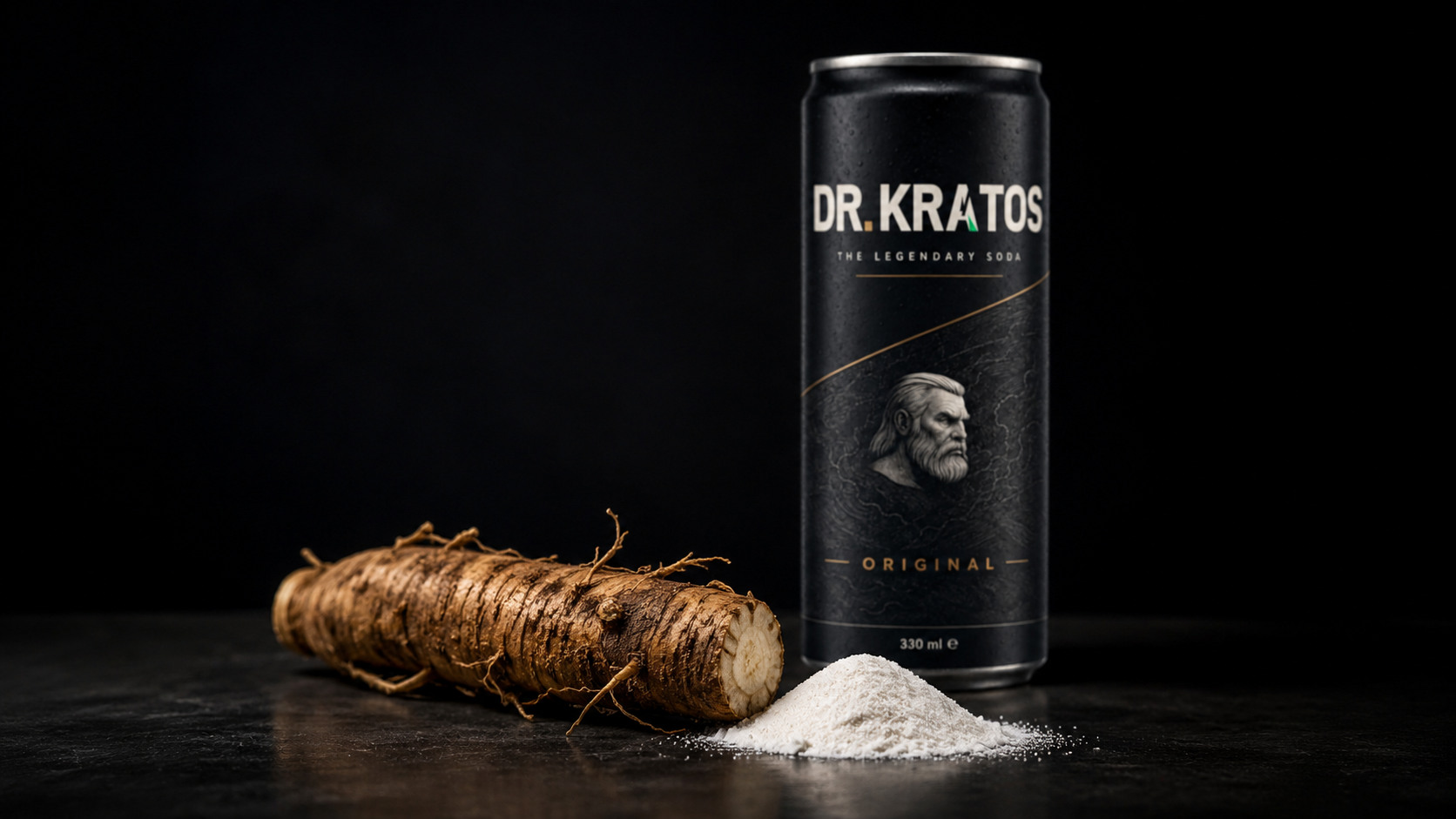
Chicory root fibre appears on the side of every DR. KRATOS can. It is not there as decoration, and it is not there to give us a fashionable ingredient to place on the front. It solves a fairly ordinary problem that becomes obvious the moment sugar is removed from a soda.
Sugar does more than sweeten
Sugar has two jobs in a conventional soda. The first is sweetness. Everyone remembers that one. The second is body. Dissolved sugar gives the liquid weight, changes the way it moves across the palate, and helps flavour remain present after the first sip.
Sugar does two jobs. Everyone remembers the first one.
Replacing sweetness is relatively straightforward. Steviol glycosides, sucralose and other sweeteners can do that work in very small quantities. Replacing body is harder. Take the sugar out without replacing what it contributes to texture and the result can feel thin. The flavour arrives quickly and disappears just as quickly. The drink may be sweet enough, but it still tastes as if something has been removed.
That is the compromise found in many sugar-free sodas. It is not necessarily a problem with the flavour itself. It is often a problem with the liquid carrying it.
We use chicory root fibre to put that weight back.
What inulin is
The fibre extracted from chicory root is called inulin. It is a soluble dietary fibre found naturally across more than 36,000 plant species. Chicory, Cichorium intybus, contains it in particularly high concentrations, which is why the root has become one of its main commercial sources.
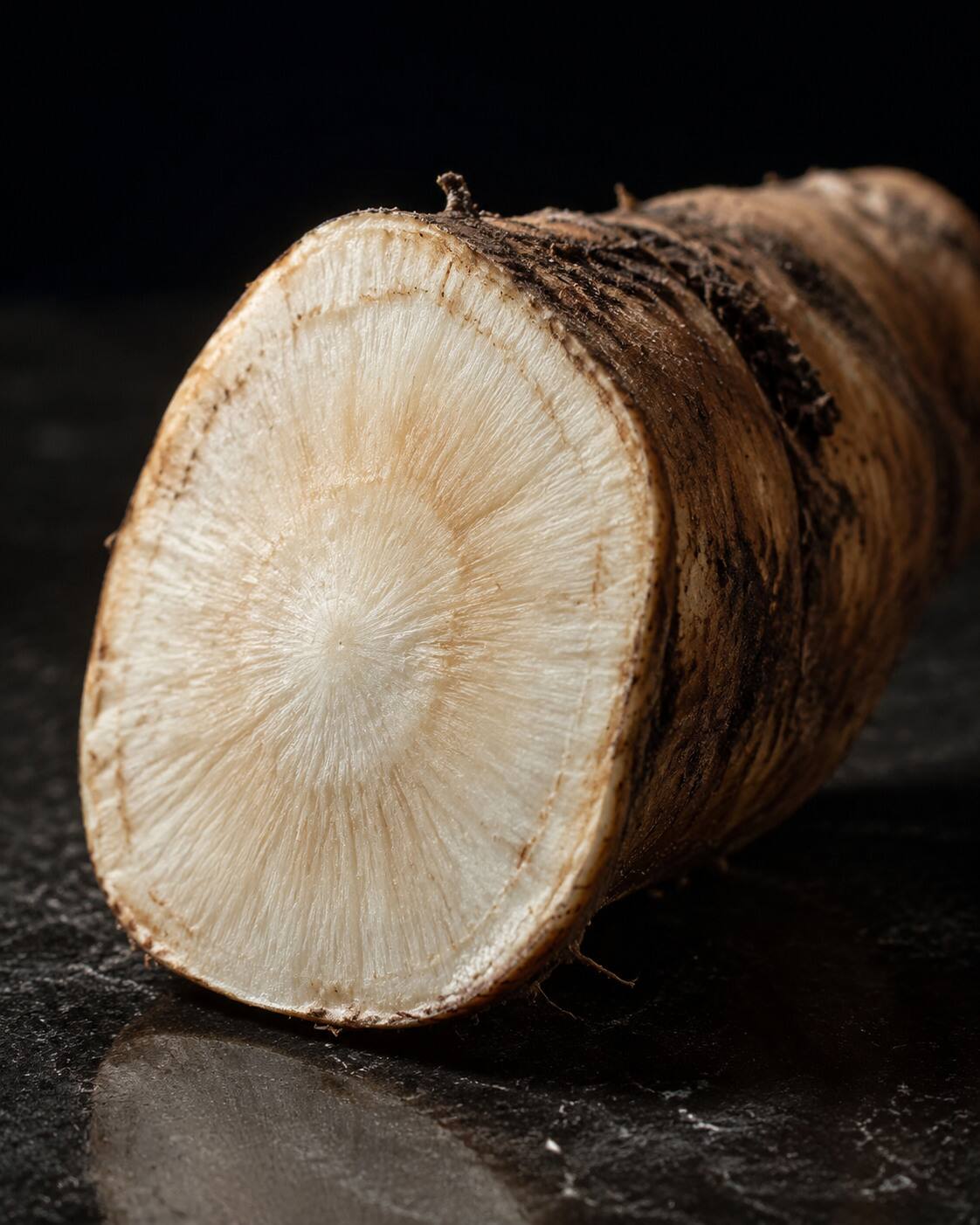
The root in cross-section. The pale interior is where the inulin sits.
The process is less exotic than the ingredient name suggests. Chicory roots are harvested and sliced. Their inulin is extracted with hot water, in a process broadly comparable to the first stages of sugar beet processing. The liquid is then purified and dried. The final ingredient is a fine white powder. It dissolves clearly in water and has only a faint sweetness of its own.
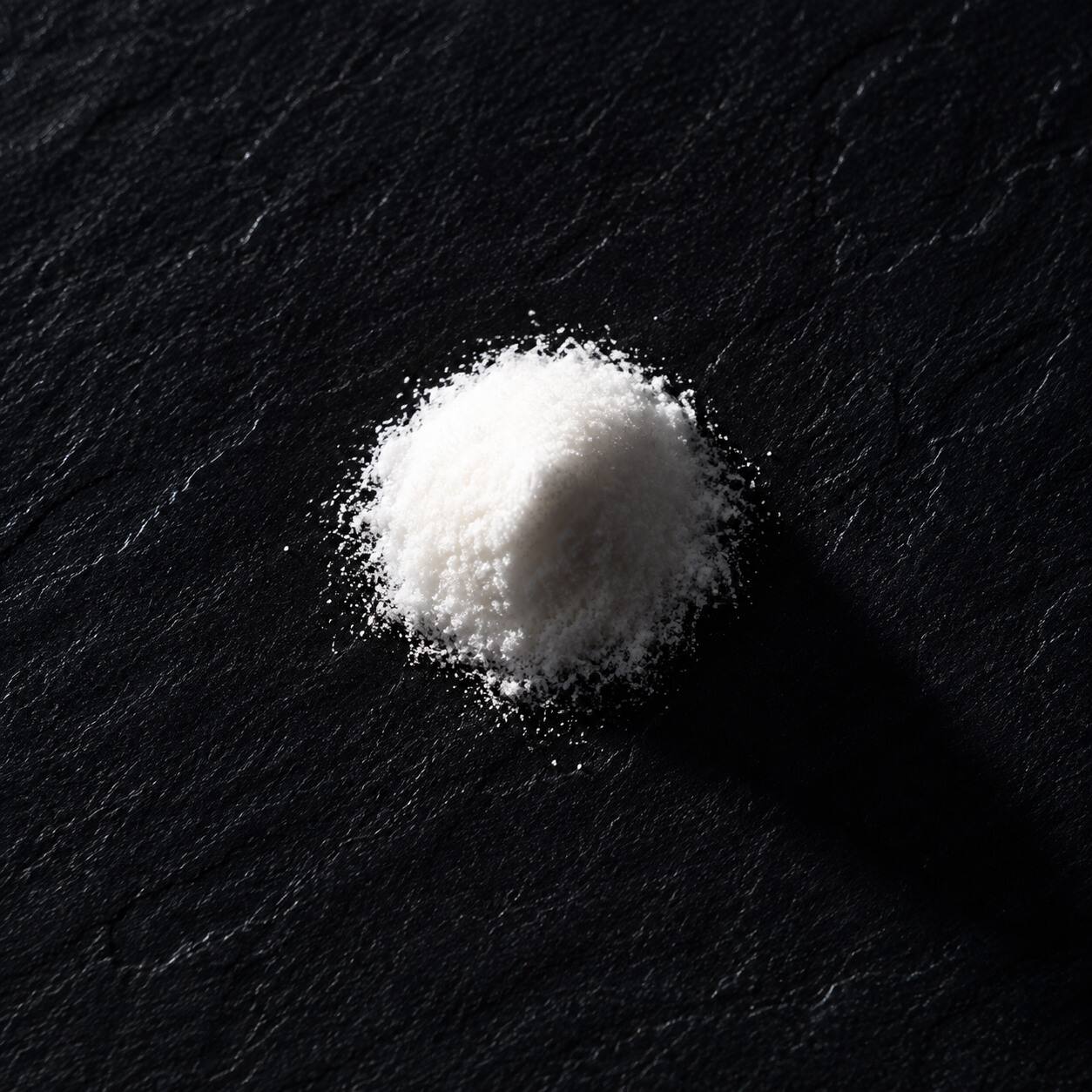
Inulin, extracted and dried. It dissolves clear.
At a molecular level, inulin is made from chains of fructose units. Those chains are not broken down in the small intestine. That is a compositional fact, rather than the reason we put it in the drink. For us, the useful part happens before the can is finished and while the soda is being tasted.
What it does in the can
Once dissolved, inulin changes the physical character of the liquid. It introduces viscosity without turning the drink heavy or cloudy. It helps flavour compounds travel across the palate for longer, softens the space between the first taste and the finish, and gives the finished soda a more rounded structure.
This matters because sweetness alone cannot create length. A sweetener can reproduce the immediate signal of sugar, but it does not reproduce sugar's mass. Inulin supplies part of what would otherwise be missing. It is why Original has a long finish rather than a sharp one.
There is no theatre in the process. The powder is measured, dissolved and combined with the rest of the formula. It becomes invisible. The drink does not look fibrous, and the ingredient has no visible role to perform. Its work is in the texture.
Each 330 ml can contains 9.9 g. That is a substantial quantity for the category, and higher than the amount used in many functional sodas. We did not choose it because 9.9 makes an impressive number on a nutrition panel. We arrived at it through the formulation. Less produced a thinner drink. The flavour needed more structure, so we used more.
Why it stays on the side
There is a temptation, whenever a product contains a functional ingredient, to make that ingredient the entire proposition. Put it in large type. Build the front of the can around it. Explain it before anyone has taken a sip.
We chose not to do that. The moment fibre becomes the primary reason to buy a soda, the drink begins competing in the wellness aisle. DR. KRATOS is a soda. Its ingredients must support the flavour and texture, not replace them as the subject.
We have written about that position before in Fibre, quietly. The principle is simple. Function can be built into a drink without requiring the customer to perform an act of self-improvement every time they open one. It can simply make the product work better.
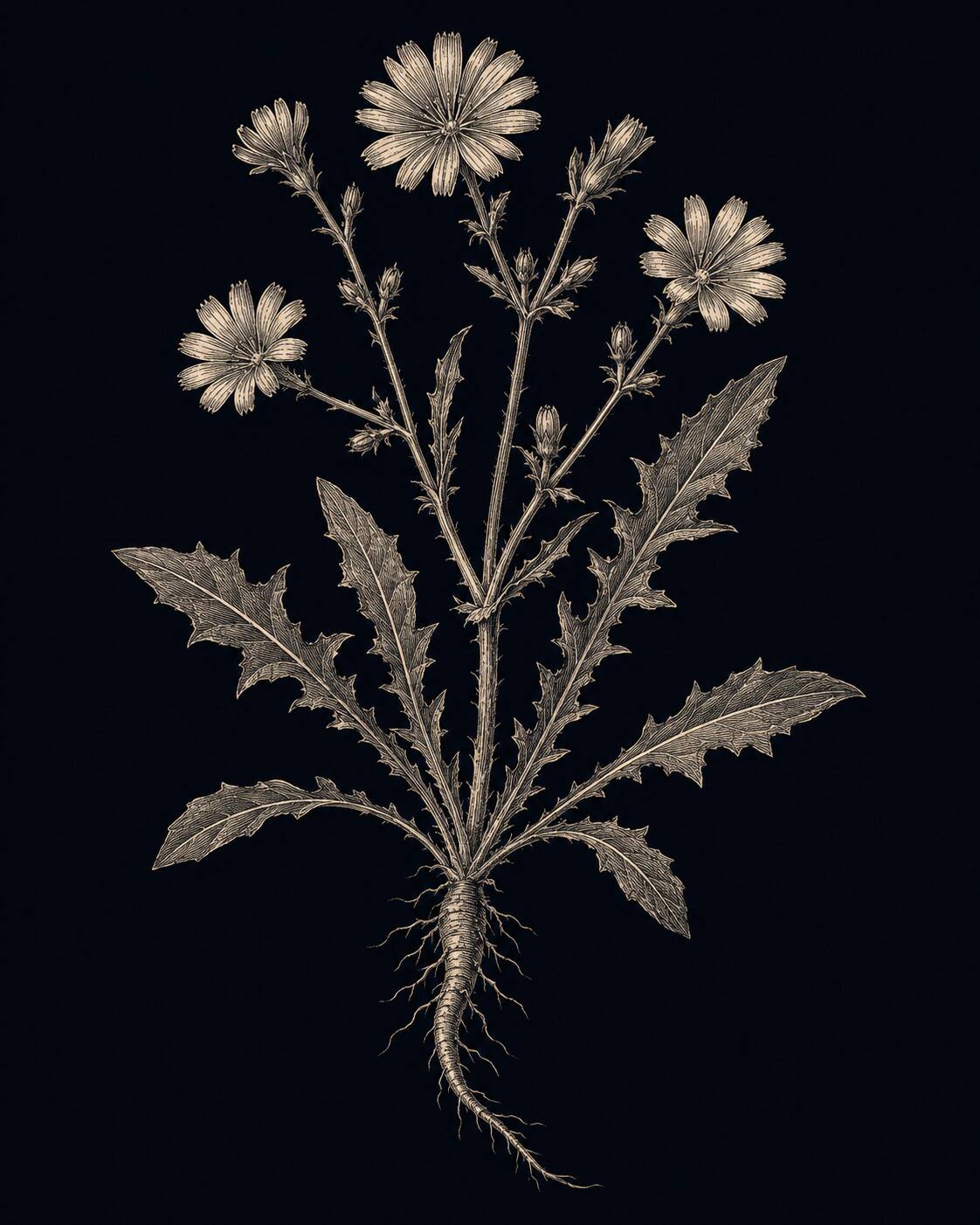
Chicory, engraved in the same line work as the rest of the range.
Chicory root fibre is on the back of the can, in small type, where it belongs. It is also the reason the drink tastes the way it does.

KRATOS Editorial Team
The DR. KRATOS Editorial Team writes about flavour, formulation and the details behind the legendary soda.